Electric power steering for VW Beetle, Golf 1, Combi, and T3.
Electric Power Steering for Volkswagen Beetle, Golf 1, and Combi T1/T2/T3: The Complete Guide
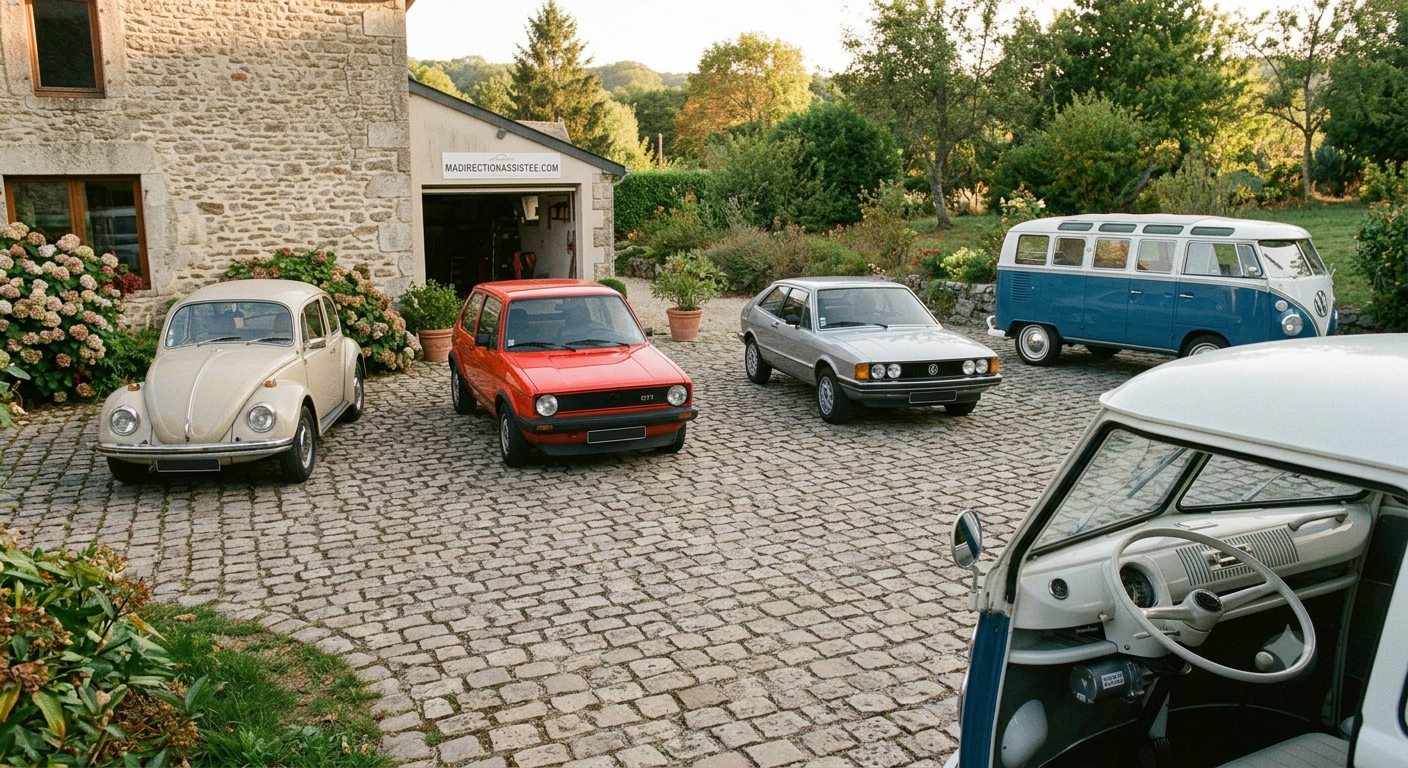
Beetle, Golf 1, or Combi - these three Volkswagen icons share a common flaw from their early days: heavy mechanical steering, especially noticeable during low-speed maneuvers or parking. Good news: an adaptable electric power steering kit now allows for upgrading the driving comfort of these cult vehicles without altering their original character.
Why do these Volkswagen models pose issues at the wheel?
The Beetle and the Combi (T1, T2, T3) share non-assisted rack-and-pinion or worm gear steering, designed at a time when comfort was not a priority. Particularly on the Combi, the weight on the front axle and the complete lack of assistance make parallel parking and city maneuvers particularly challenging.
The lighter Golf 1 suffers less from this issue on the road, but non-assisted versions remain physically demanding to handle in parking lots, especially for users not accustomed to older vehicles.
The benefits of an adaptable electric power steering
- Significantly reduced steering effort, especially when stationary and at low speeds
- Non-invasive installation: the kit attaches to the existing steering column without drilling or making irreversible modifications to the bodywork
- Load-sensitive system that assists only when necessary, unlike a hydraulic pump that runs continuously
- Preservation of the original aesthetics, with the electronic unit discreetly fitting under the dashboard
- Increased reliability due to the absence of a hydraulic circuit, eliminating the risk of oil leaks
Beetle: Restoring Lightness to an Icon
On the Beetle, the kit is positioned directly on the steering column, between the steering wheel and the gearbox. The operation is usually completed in half a day by a skilled mechanic without removing the dashboard. The comfort improvement is immediately noticeable from the first turns of the wheel, especially during city parking maneuvers.
Golf 1: Comfort at Current Standards
For the Golf 1, adding electric assistance allows for a steering lightness comparable to modern vehicles while retaining the driving sensations that give charm to this generation. This option is particularly appreciated by owners who use their Golf 1 daily or for regular outings, not just for exhibitions.
Combi T1, T2, T3: The Greatest Comfort Gain
The most spectacular benefit is arguably on the Combi. The vehicle's weight and frequent urban use (transport, camping, family outings) make electric assistance particularly relevant. Depending on the generation:
- T1 (1950-1967): installation on the classic steering column, adaptation required depending on the exact model
- T2 (1967-1979): the most common model in restoration, with easy access to the steering column
- T3 (1979-1992): a more modern steering system, but still non-assisted on most versions, with generally quick installation
How long does the installation take?
The installation time varies depending on the model and the accessibility of the steering column: typically between 6 and 10 hours for a Combi or Beetle. The Golf 1, with easier access to the driver's area, often allows for an even quicker installation.
A Kit that Respects Your Vehicle's Heritage Value
Unlike a major transformation, an adaptable electric power steering kit requires no irreversible modifications: no drilling, no welding, no alteration of original mounting points. This ensures that the vehicle retains its full collectible value while gaining everyday driving comfort.
Summary
Whether you drive a Beetle, Golf 1, or Combi, adaptable electric power steering radically enhances the driving pleasure without altering your vehicle. It is currently one of the most popular modernizations among owners of vintage Volkswagens who want to drive more often and more comfortably.
Do you own a Beetle, a Golf 1, or a Combi and would like to learn more about the kit suitable for your vehicle? Contact us or request your personalized quote.